2026-10-06 · Kalei Akana
Protecting AC Units from Salt Air in Coastal Honolulu
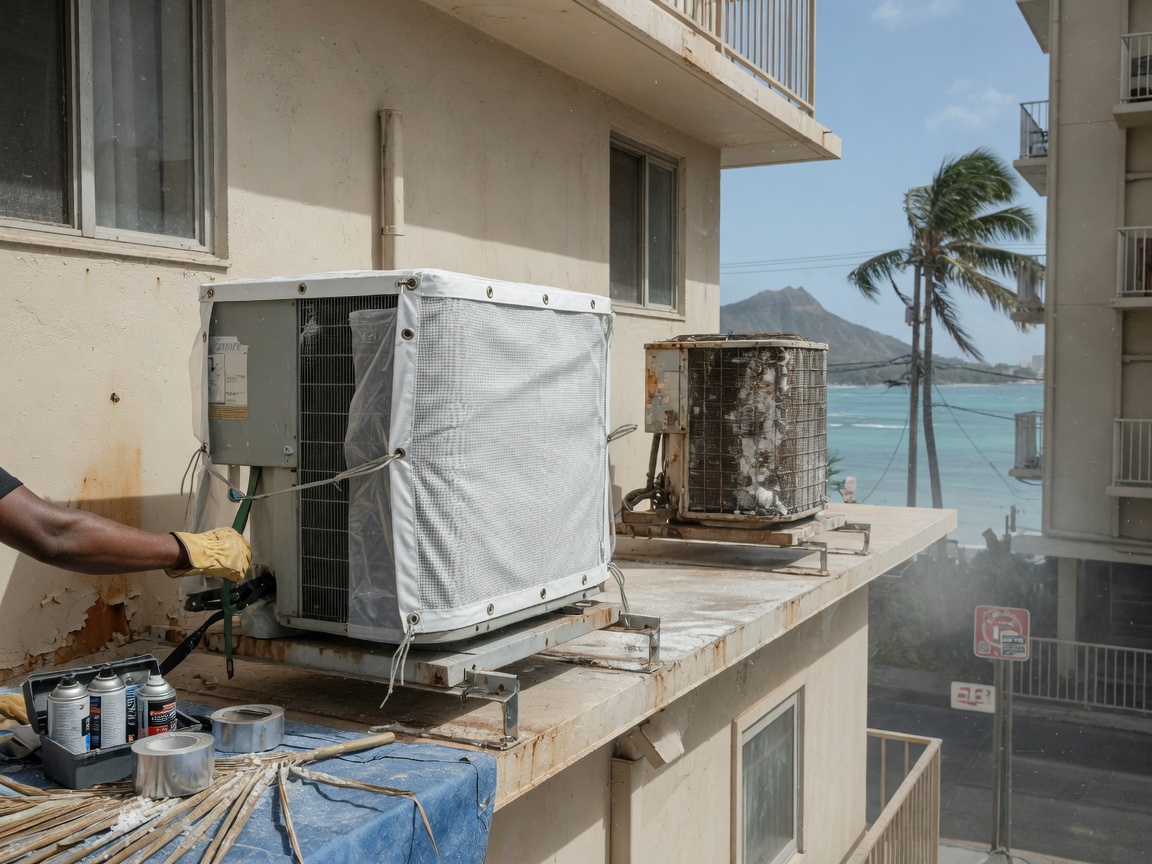
Salt air from the Pacific reaches inland through trade winds and shortens the life of unprotected AC components in coastal Honolulu. In neighborhoods such as Waikiki and Kakaako, units near Waikiki Beach or Diamond Head face constant exposure that pits aluminum fins and copper coils faster than in inland spots like Manoa or Nuuanu. Applying factory-approved coatings during service visits and scheduling inspections every six months keeps systems running through the dry season without premature replacement.
How Salt Air Affects AC Equipment in Honolulu County
Trade winds pick up salt spray daily along the shoreline and carry it into residential blocks in Waikiki, Kakaako and Kalihi. The moisture combines with salt to form an electrolyte that speeds galvanic corrosion on outdoor condensers and evaporator coils. Homeowners in these zones often notice white powder on fins and reduced airflow within three to five years when no barrier coating is present. Inland neighborhoods such as Palolo or Alewa Heights see slower damage because the salt concentration drops sharply once the wind crosses the first ridge line. Regular visual checks for pitting and fin damage allow early intervention before refrigerant leaks develop.
Practical Steps to Shield Units Near Waikiki Beach and Diamond Head
Start by rinsing the outdoor unit monthly with fresh water during the dry season to remove salt buildup before it hardens. Apply a corrosion-inhibiting coating rated for marine environments to both the condenser coils and cabinet during the next AC Maintenance visit. In high-exposure pockets like Kakaako or near Iolani Palace, install a louvered enclosure that blocks direct spray while still allowing airflow. Check mounting hardware for rust every quarter and replace any galvanized straps with stainless steel. These steps address the specific conditions created by Honolulu County's persistent onshore winds without requiring full system replacement.
When to Schedule Professional Service in Kakaako and Surrounding Areas
Call for AC Repair as soon as airflow drops or ice forms on the indoor coil, because salt-weakened fins restrict heat exchange quickly in Honolulu's warm temperatures. Technicians familiar with coastal stock can test coil resistance and apply touch-up coatings on site. Pair this work with guidance from the article How Honolulu Humidity Affects AC Performance to understand how salt and moisture interact year-round. Units serving homes in Moiliili or near Pearl Harbor benefit from the same schedule because prevailing winds still deliver measurable salt even several blocks from the water.
Long-Term Protection for Central Systems in Honolulu's Tropical Climate
Choose replacement coils with factory-applied epoxy coatings when an older unit reaches the end of reliable service in salt-heavy zones. Maintain a six-month filter and coil cleaning cycle to prevent the combination of salt dust and humidity from reducing efficiency. Homeowners in Downtown Honolulu and Kaimuki have extended equipment life by adding a whole-house dehumidifier that lowers the moisture load the AC must handle. These measures, performed consistently, keep systems operating through repeated trade-wind events without the frequent breakdowns common in untreated coastal installations.